

Supervisory Staff
As a PGR supervisor at UWTSD, the Doctoral College can support you every step of the way. We recognise that supervising students varies by discipline and subject and whilst every supervisory relationship is unique, there are a number of expectations that supervisors must adhere to.
In this section, you will find more information on:

Expectations
These expectations ensure that all our PGR students receive excellent academic support throughout their studies as well as ensuring that students meet their milestones and successfully complete their studies.
These expectations are;
- offer regular supervision. We recommend 10 per year, all of which must be recorded on a PG4 form;
- are accessible, within reason (e.g. by e‐mail contact) outside planned supervision meetings when advice may be required;
- provide guidance on the nature and requirements of the research degree being pursued and standards expected;
- provide guidance and advice to ensure the research can be completed, including the preparation of the thesis, normally by the end of the usual period of study;
- assist students in producing a detailed work‐plan and timetable for research and monitor progress in relation to this plan;
- encourage and support students to participate in Doctoral College training sessions and events;
- complete relevant sections of progression reports as required in a timely fashion;
- ensure the student is given sufficient warning at the earliest stage where progress is inadequate or of an unsatisfactory standard;
- request written work as appropriate and in accordance with the agreed work‐plan and return such work with constructive feedback within an agreed period of time;
- provide guidance and advice on the writing up of the thesis, including reading and giving commentary upon the thesis during the period of composition;
- provide assistance in preparing for the oral examination and explain its role in the overall examination process;
- provide appropriate supervision in the event of any re‐submission;
- maintain the necessary supervisory expertise, including accessing relevant professional development opportunities in order to effectively perform in the role of supervisor;
- provide advice on how to network within the specialist field and opportunities to achieve this. This may include advice on which learned societies to join and which conferences to attend;
- provide advice on how and where to present work, e.g. in seminars within the Institute and University and/or at external meetings/conferences;
- give advice on how and where to publish, if appropriate
Responsibilities
In addition to these tasks designed to help a student develop their academic and professional skills in their chosen field, supervisors may take on roles as Directors of Studies and in doing so become responsible for ensuring that:
- the student is provided with pastoral support as and where necessary and/or referred to other sources of support, e.g. Academic Office, Student Services;
- the training needs of the student are identified at commencement and during the programme of research;
- a full research proposal is submitted to RDC for approval within the relevant timescales;
- an application for ethical approval is submitted to the Research Ethics Committee following approval in principle of the full research proposal;
- a minimum of three meetings are held each year and attended by appropriate members of the supervisory team;
- the discussion and action points arising from each formal meeting are summarised in a formal written record which is submitted alongside the formal progression report;
- formal progression reports are completed as required in a timely fashion;
- the student is aware of the University’s regulations for research degrees as well as regulations and policies on academic misconduct, intellectual property, health and safety, and any ethical issues which may arise during the course of a student’s research;
- advice and assistance are provided on the necessary administrative processes as and where necessary, e.g. in the event of seeking an interruption of studies, change of mode study, extension of maximum time limit for submission;
- the student is given detailed advice on the expected milestones and dates for successive stages of research. This should include but not be limited to giving information on what criteria must be met in order to progress satisfactorily, upgrade to a higher level research degree, and the dates which these must be achieved by.
Staff training
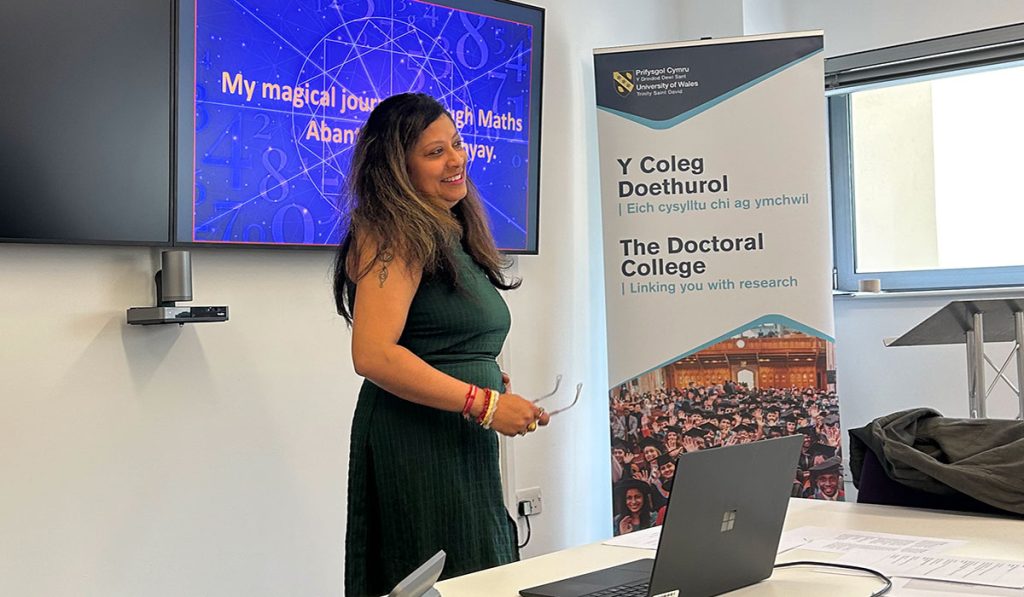
The Doctoral College runs regular training sessions for new and existing PGR supervisors at UWTSD. Our sessions are designed alongside PGR milestones, expectations and guidelines to ensure that staff and PGR students get the best experience possible whilst you are working with us.
To see upcoming events, follow this link to the staff events calendar on the university intranet.
There are some very good external training and advice sessions, and the University is a member of/subscriber to both the UK Council for Graduate Education (UKCGE) and Vitae, both of which offer useful training and advice. Our institutional membership means you can log into the member section of each using your UWTSD email account.